UTILIZATION PATTERNS AND ONE-YEAR OUTCOMES OF HELLER MYOTOMY VS POEM
Kevin Nguyen1, Ahmed Telbany2, Amal Shine21. The University of New Mexico Department of Internal Medicine, Albuquerque, NM, United States.
2. The University of New Mexico Health Sciences Center, Albuquerque, NM, United States.
Background and Aims:
Peroral endoscopic myotomy (POEM) has rapidly gained prominence as a minimally invasive alternative to Heller myotomy for achalasia. However, national adoption patterns have not been well described, particularly since the introduction of the POEM-specific ICD-10 code in 2022, which enabled reliable procedural capture in large datasets. We evaluated nationwide utilization trends of POEM and Heller myotomy from 2022-2024 and briefly compared associated reflux outcomes.
Methods:
We conducted a retrospective study using the TriNetX research network, aggregating real-world clinical data across multiple U.S. health systems. Annual procedure counts for Heller myotomy and POEM were extracted for 2022-2024. The starting year of 2022 was selected because it coincides with the creation of the POEM ICD-10 code, ensuring accurate procedural classification. Trends were summarized descriptively. One-year incidence of new GERD and esophagitis was assessed among patients without prior diagnoses.
Results:
Beginning in the first year of reliable coding (2022), POEM was already performed more frequently than Heller myotomy and showed a marked upward trajectory. POEM utilization increased from 633 procedures in 2022 to 733 in 2023 and 881 in 2024. In contrast, Heller myotomy declined steadily from 401 procedures in 2022 to 316 in 2023 and 269 in 2024. By 2024, POEM was performed more than three times as often as Heller.
Reflux-related outcomes were more common after POEM. Among patients without pre-existing disease, new GERD occurred in 24.2% after POEM versus 12.8% after Heller, while new esophagitis occurred in 4.1% and 2.7%, respectively.
Conclusions:
Following the introduction of the POEM ICD-10 code in 2022, national utilization data demonstrate a rapid and consistent increase in POEM procedures accompanied by a concurrent decline in Heller myotomy. By 2024, POEM had become the dominant intervention for achalasia across participating health systems. Despite this shift, POEM was associated with higher rates of GERD and esophagitis, underscoring the importance of careful reflux surveillance as POEM continues to replace traditional surgical management.
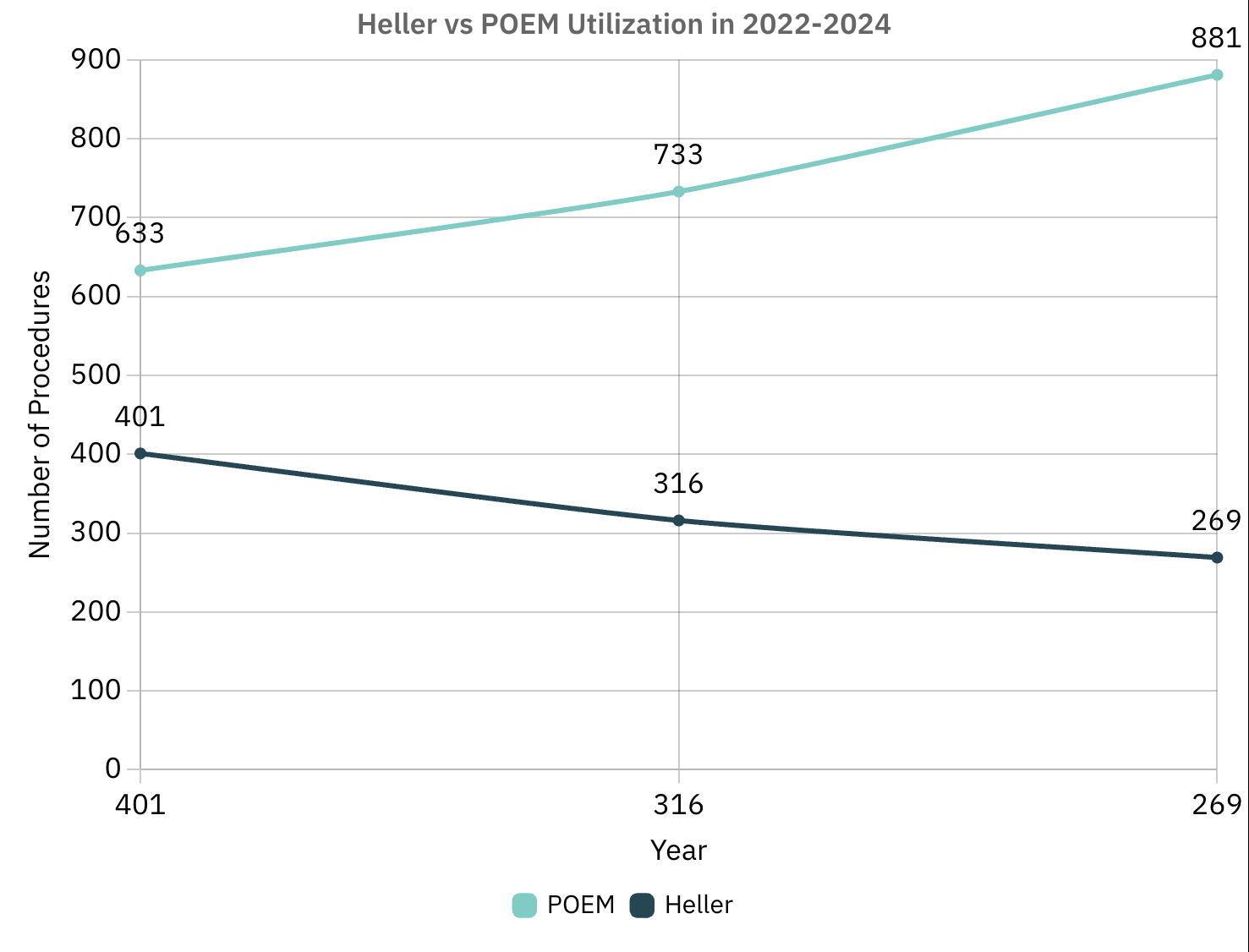 Figure X. National utilization of Heller myotomy versus POEM from 2022-2024.
Following the introduction of the POEM procedure code in 2022, POEM use increased steadily while Heller myotomy declined over time. By 2024, POEM was performed more than three times as often as Heller myotomy.
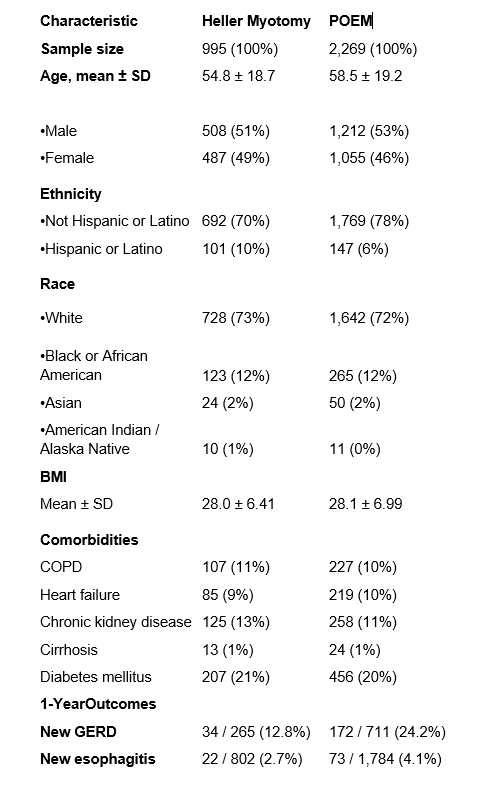 Table X. Baseline characteristics and 1-year reflux outcomes in patients undergoing Heller myotomy versus POEM.
Demographics, comorbidities, and BMI were broadly similar between groups. POEM patients experienced higher 1-year rates of new GERD and esophagitis compared with Heller myotomy.
IMAGE CAPTION: Figure X. National utilization of Heller myotomy versus POEM from 2022-2024.
Following the introduction of the POEM procedure code in 2022, POEM use increased steadily while Heller myotomy declined over time. By 2024, POEM was performed more than three times as often as Heller myotomy.
Table X. Baseline characteristics and 1-year reflux outcomes in patients undergoing Heller myotomy versus POEM.
Demographics, comorbidities, and BMI were broadly similar between groups. POEM patients experienced higher 1-year rates of new GERD and esophagitis compared with Heller myotomy.
Back to 2026 Abstracts